Overview
Interviews contain valuable information, but that information is easy to lose. Recruiters may take partial notes. Moderators may focus on the conversation and miss details. Hiring managers may receive summaries that do not capture the nuance of the original answer. Automated transcription helps solve this problem by turning spoken interviews into searchable written records.
For Interviewly, transcription is not just a convenience. It supports better recruitment, better respondent screening and better qualitative research workflows.
Why Interview Transcription Matters
A good interview requires attention. The person leading the conversation should listen, ask follow-up questions and build enough trust for the candidate or respondent to answer fully. Manual note-taking can interrupt that flow.
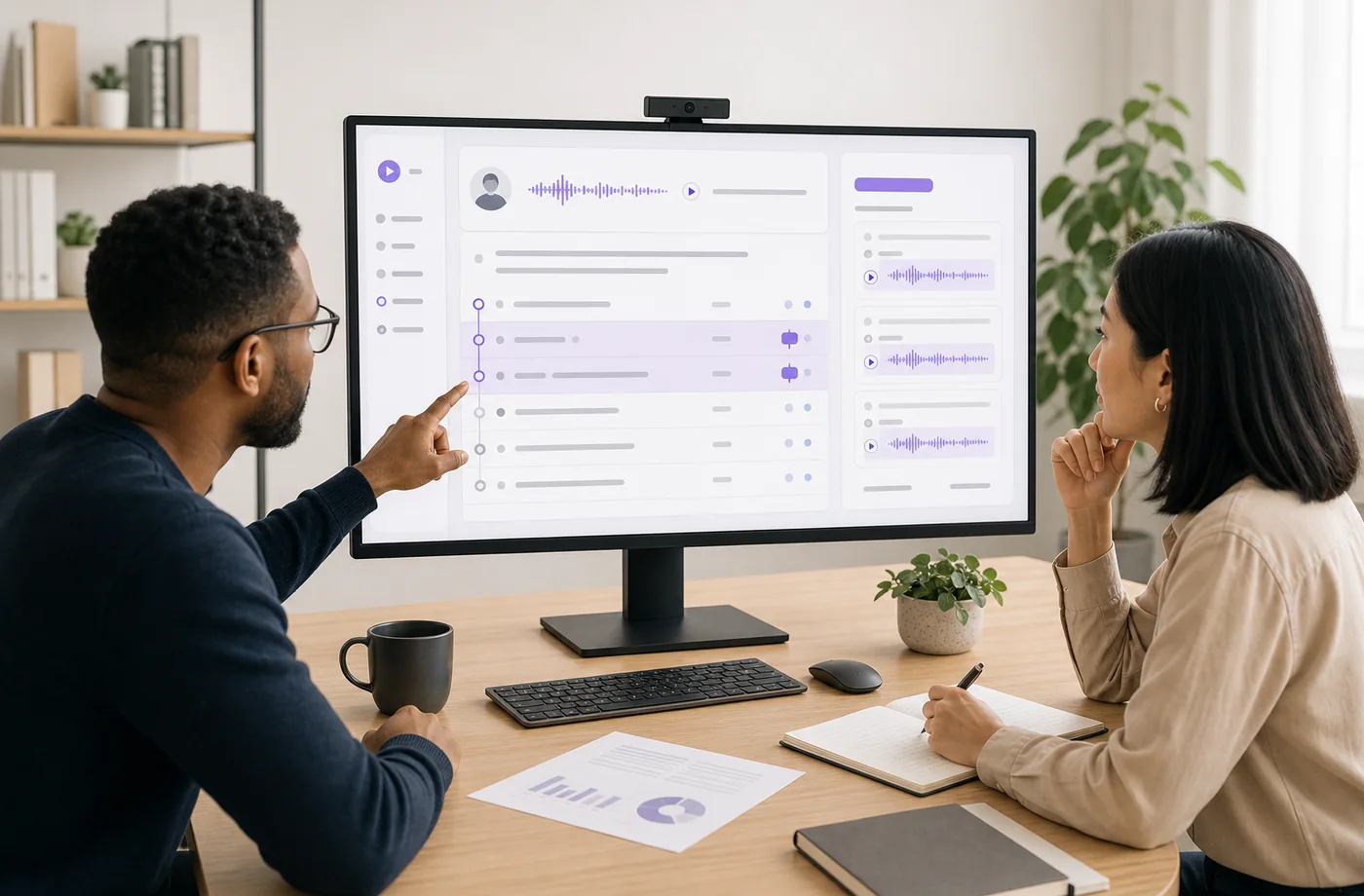
Automated transcription allows the interviewer to stay present while still creating a detailed record. After the interview, the team can review exact answers, identify themes, compare candidates and prepare feedback.
Efficiency: Less Manual Documentation
Interviewly's automated transcription reduces the need to write detailed notes during every interview. The conversation is captured and converted into text, helping teams avoid repetitive documentation work.
This is useful in high-volume recruitment, but it is equally useful in qualitative research. Research teams often need to review many interviews, extract themes and share findings with clients. A searchable transcript makes that work faster and more reliable.
Accuracy: Better Records for Review
Interview records are more useful when they are complete and easy to search. Transcription helps recruiters return to specific answers instead of relying on memory or short notes. It also helps teams check whether a candidate's answer was interpreted correctly.
In respondent screening, transcription can help document why a person qualified or did not qualify for a project. In specialist recruitment, it can help hiring managers review technical answers more carefully.
Collaboration Across Teams
Transcription becomes more powerful when it connects with the rest of the recruitment workflow. In Interviewly, transcripts can sit alongside candidate profiles, evaluation notes and team feedback. This gives everyone the same source material for review.
Hiring teams can discuss specific answers rather than general impressions. Research teams can compare respondent comments across interviews. Managers can make decisions with more confidence because the evidence is easier to inspect.
Multilingual Support
Many recruitment and research projects involve more than one language. Automated transcription with multilingual support helps teams manage interviews across markets and respondent groups. It reduces communication barriers and makes it easier to include people from different language backgrounds.
Conclusion
Automated transcription streamlines recruitment by improving documentation, saving time and supporting more consistent review. In Interviewly, it helps teams capture interview content, collaborate around the same material and make decisions based on clearer evidence. For HR and research teams, that means less manual work and stronger interview records.
Want a cleaner recruitment workflow?
See how Interviewly helps teams structure screening, interviews, notes and client review across recruitment and research projects.
Explore the platform